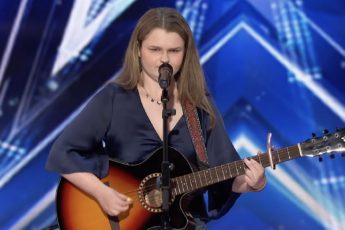
A young man stepped onto the stage carrying a story heavier than anyone could see. He didn’t come with flashy vocals or a grand performance plan — just a quiet song he had written for his grandmother, who was living with Alzheimer’s disease. As he began to sing, his voice trembled slightly, but it held something far more powerful than perfection: love, memory, and the pain of slowly losing someone who is still right in front of you.
With every lyric, he painted moments that felt deeply personal yet painfully universal — the fading recognition in her eyes, the conversations that no longer made sense, and the desperate hope that, somehow, she still remembered him. The room grew still. The judges, the audience — everyone was drawn into his story. It wasn’t just a song anymore; it was a glimpse into a reality many fear but few can put into words. And in that vulnerability, he connected with every single person listening.
By the time he reached the final note, the silence was overwhelming, quickly replaced by emotion that could no longer be held back. Tears filled the eyes of the judges, the audience rose to their feet, and for a moment, nothing else mattered but what they had just experienced. His performance became more than a tribute — it was a reminder of the fragility of memory, the strength of love, and the way music can hold on to what time tries to take away.